Non-wear
The device isn’t worn consistently enough to produce a valid daily signal.

Signal QC
Wearable data rarely fails all at once. It weakens quietly through non-wear, sync lag, battery loss, and pairing issues. Delve catches it while there’s still time to recover.
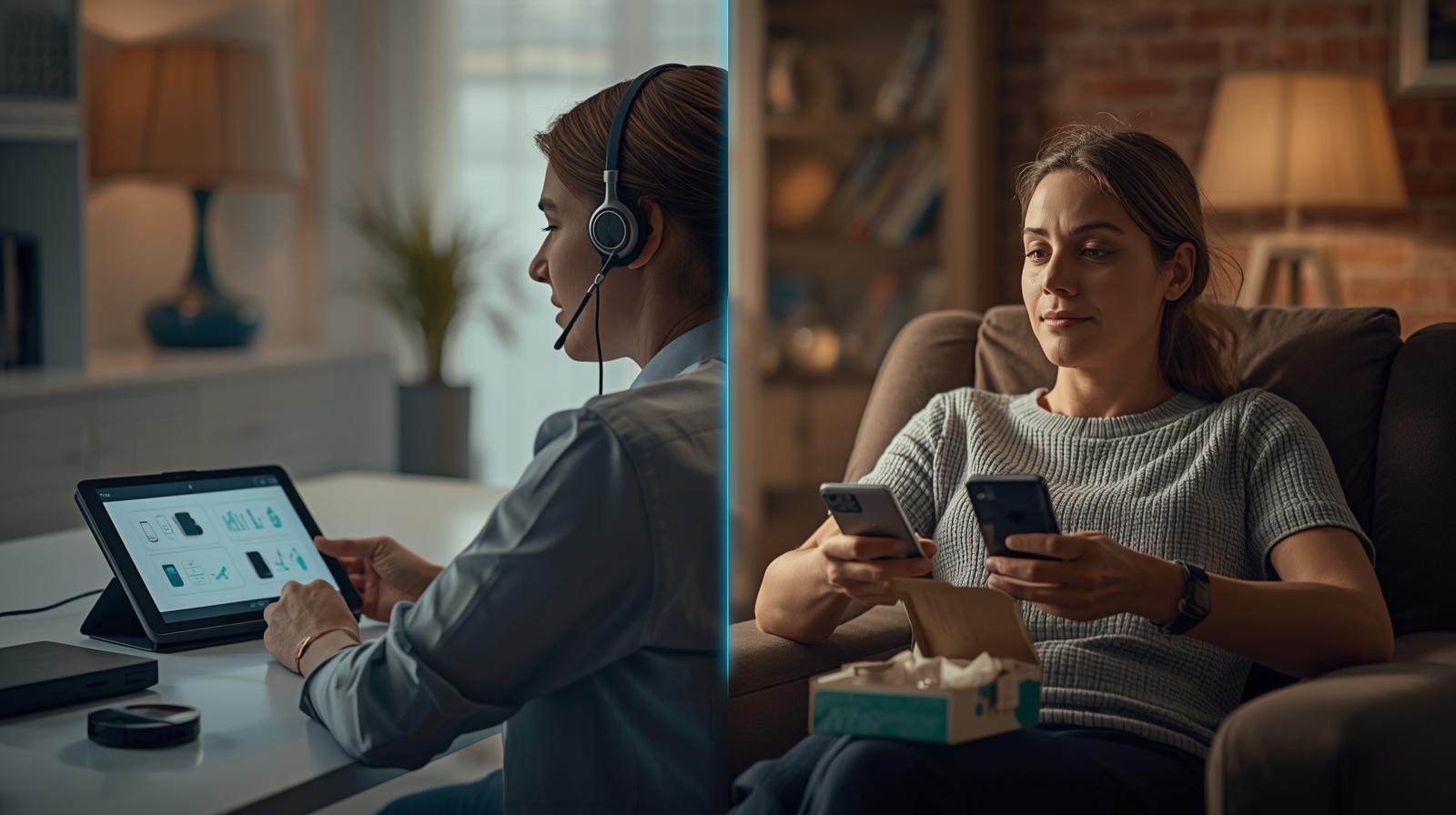
Signal quality control is the ongoing check that wearable data is present, recent, complete, and usable enough to support the study. It’s how teams tell “device deployed” apart from “data trustworthy.”
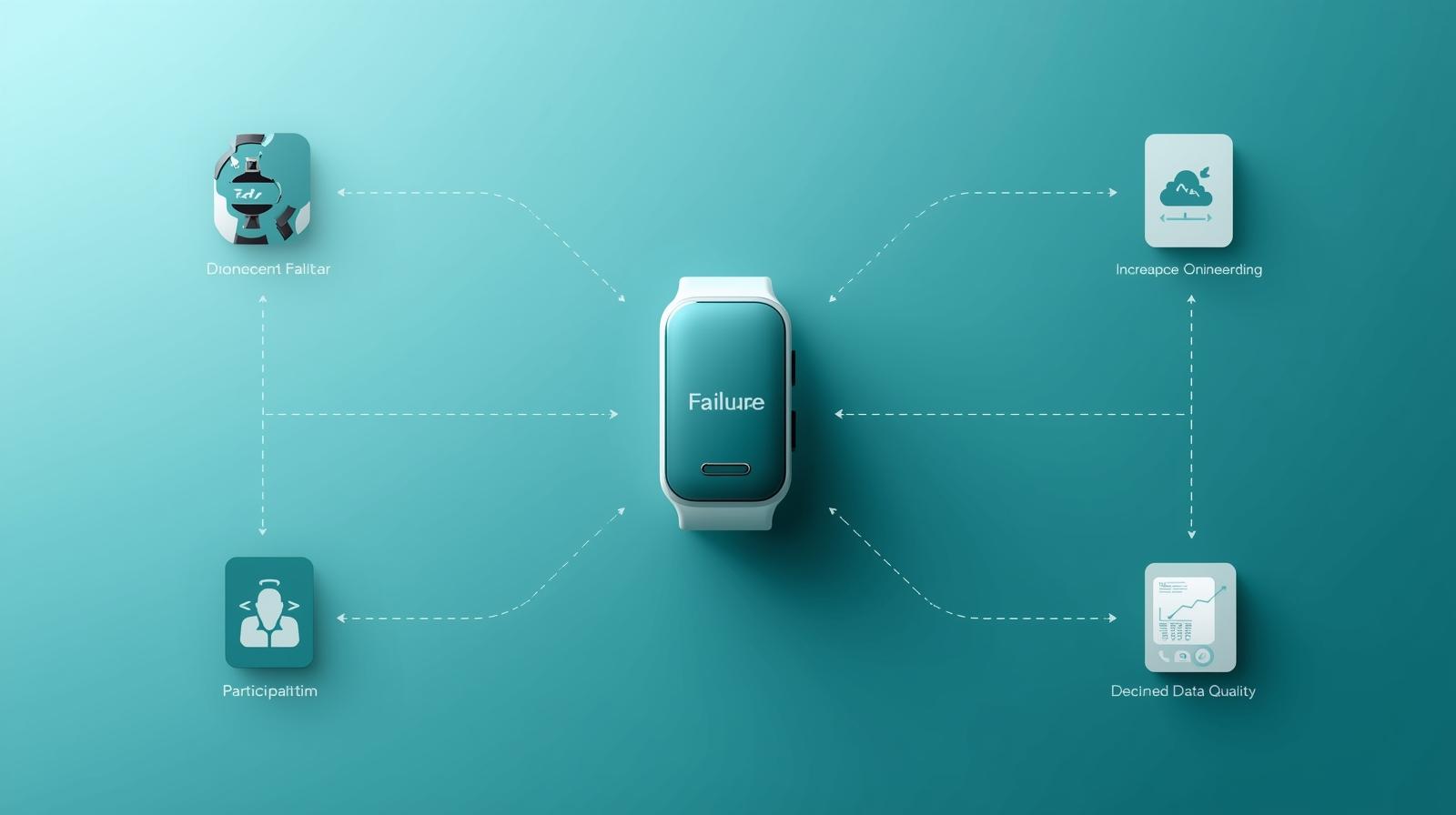
Data quality usually degrades through a handful of predictable patterns. They aren’t just technical issues. They’re operational signals that need early action.
The device isn’t worn consistently enough to produce a valid daily signal.
Battery depletion creates recurring dead zones in the dataset.
Data exists on the device but doesn’t reach the study platform in time.
Bluetooth or app connectivity drops and never fully recovers.
Phone settings, app restrictions, or OS updates quietly interrupt data flow.
Some data arrives, but not enough to meet analytic or endpoint-quality rules.
Weak monitoring stops at “device assigned” and finds problems at weekly review. Strong signal QC asks whether this signal can still support the study.
Not just a dashboard, but a repeatable operating model. It works best when digital monitoring is paired with human follow-through.
Monitor wear-time, valid-day status, sync recency, battery state, and device health continuously.
Decide whether the issue is behavioral, technical, temporary, or a real data continuity risk.
Trigger practical steps: charge, re-pair, re-sync, check settings, or reach out to the patient.
Alert sites only when needed, with context and prior actions already documented.
Track timing, action taken, recovery status, and recurrence for oversight and root-cause learning.
Feed recurring issues back into device selection, onboarding, workflows, and participant support.
The detail behind signal QC, for teams planning a wearable study.
Wearable studies can lose data silently. Signal QC creates the visibility needed to spot drift early and keep digital measures usable over time. It is not just a technical safeguard. It is a study-execution safeguard.
Endpoints weaken when signals are missing, stale, sparse, or technically compromised for long periods.
Participants may think everything is working while sync, battery, or permissions have already stopped data flow.
Early detection gives teams a chance to restore continuity before missingness becomes hard to explain or impossible to recover.
Structured signal QC keeps coordinators from being the first place device issues are discovered and triaged.
Results are easier to interpret when teams understand signal completeness and device-health context over time.
As studies get longer, small data issues compound into longitudinal evidence loss, so weak QC gets more expensive.
Device assigned. Participant enrolled. Some data arrived once. Problems found at weekly review. No clear recovery thresholds.
Wear-time thresholds. Valid days and usable-data rules. Sync recency and latency checks. Battery, pairing, and device-health status. Defined actions when thresholds are crossed.
Strong programs define signal-quality rules before launch and treat QC thresholds as operational triggers, not passive reporting metrics. The goal is simple: fewer silent gaps, faster recovery, and stronger confidence in wearable-driven digital measures.
Minimum wear-time, valid-day definitions, acceptable sync latency, and battery thresholds.
Same-day or next-day outreach when problems appear.
Smart escalation with issue context, not raw alert flooding.
Simple troubleshooting with real support when needed.
One place to view signal health across devices and participants.
Repeated QC issues feed back into device strategy and process improvements.
A participant asks: “I’m still wearing it. Why does it show missing data?” Signal QC checks whether the signal is actually present, synced, recent, and usable, not just whether the participant is enrolled. The workflow runs detect, diagnose, recover, escalate. The strongest programs catch technical and behavioral drift before endpoint quality degrades: they protect the signal, not just the device.
Signal quality control, or signal QC, is the process of monitoring whether wearable data is present, valid, complete, and trustworthy. It typically includes wear-time checks, sync recency, battery state, device health, and alerting when signal quality begins to deteriorate.
Wearable studies often lose data silently. A participant may still be enrolled and appear compliant while the device has stopped syncing, the battery is depleted, or wear-time has declined below usable thresholds.
Not exactly. Device compliance focuses on whether the participant is wearing or using the device as intended. Signal QC is broader and includes whether the data being produced is present, complete, and technically valid enough to support study analysis.
A strong signal QC program should monitor wear-time, valid days, sync recency, battery level, pairing state, missingness patterns, data latency, and device health indicators, then trigger recovery workflows when thresholds are crossed.
No. Some signal issues are technical, but many begin with participant behavior, follow-up timing, or weak recovery ownership.
Yes. A participant may still be enrolled and trying to comply while the device has poor wear-time, sync failure, or battery loss that undermines usable data quality.
Because detecting a problem is only half the job. The study still needs a reliable way to recover the signal before missingness compounds.
How signal QC, sync recovery, and continuity protect endpoint integrity in wearable trials.
How signal QC protects endpoint integrity before, during, and after data lock.
Read →The most common failure mode in wearable trials, and why dashboards alone don’t catch it.
Read →Trials rarely fail loudly. They degrade quietly between visits. Here’s the operating model that prevents it.
Read →Delve combines device monitoring, analytics, and human support to reduce silent missingness and keep longitudinal signals usable throughout the study.
Book a wearables walkthrough Explore Delve wearables capabilities